
Durga Puja Food in Kolkata: 15 Traditional Bengali Dishes to Try
Table of Contents
A plate of khichuri with labra, luchi torn into cholar dal, or a spoonful of mustard gravy mixed into hot rice: there are several ways to plan a Bengali meal during Puja. Some dishes belong closely to the bhog served at community celebrations. Others are familiar choices for a restaurant lunch between pandal visits or a family dinner after an evening out.
This guide to Durga Puja food in Kolkata covers 15 traditional Bengali dishes, from vegetarian preparations to fish, mutton and dessert. It explains what each tastes like and what to eat alongside it, so you can choose a meal that suits your appetite. You do not need to order everything. A few dishes that work well together will give you more pleasure than a table full of competing gravies.
Bhog and restaurant meals: what is the difference?
Bhog is food offered to the deity and then shared with devotees. Khichuri and labra are familiar parts of Bengali Puja bhog, often accompanied by a fried item and chutney. Menus and practices vary between organisers and households.
Restaurant dining during Durga Puja covers a wider range of meals, including fish and meat preparations. These should not be confused with the vegetarian khichuri bhog many visitors encounter at community pujas.
The dishes below cover both settings. Khichuri and labra provide the bhog context; the rest help you navigate a traditional Bengali restaurant menu.
Rice, breads and vegetarian dishes
1. Bhoger khichuri
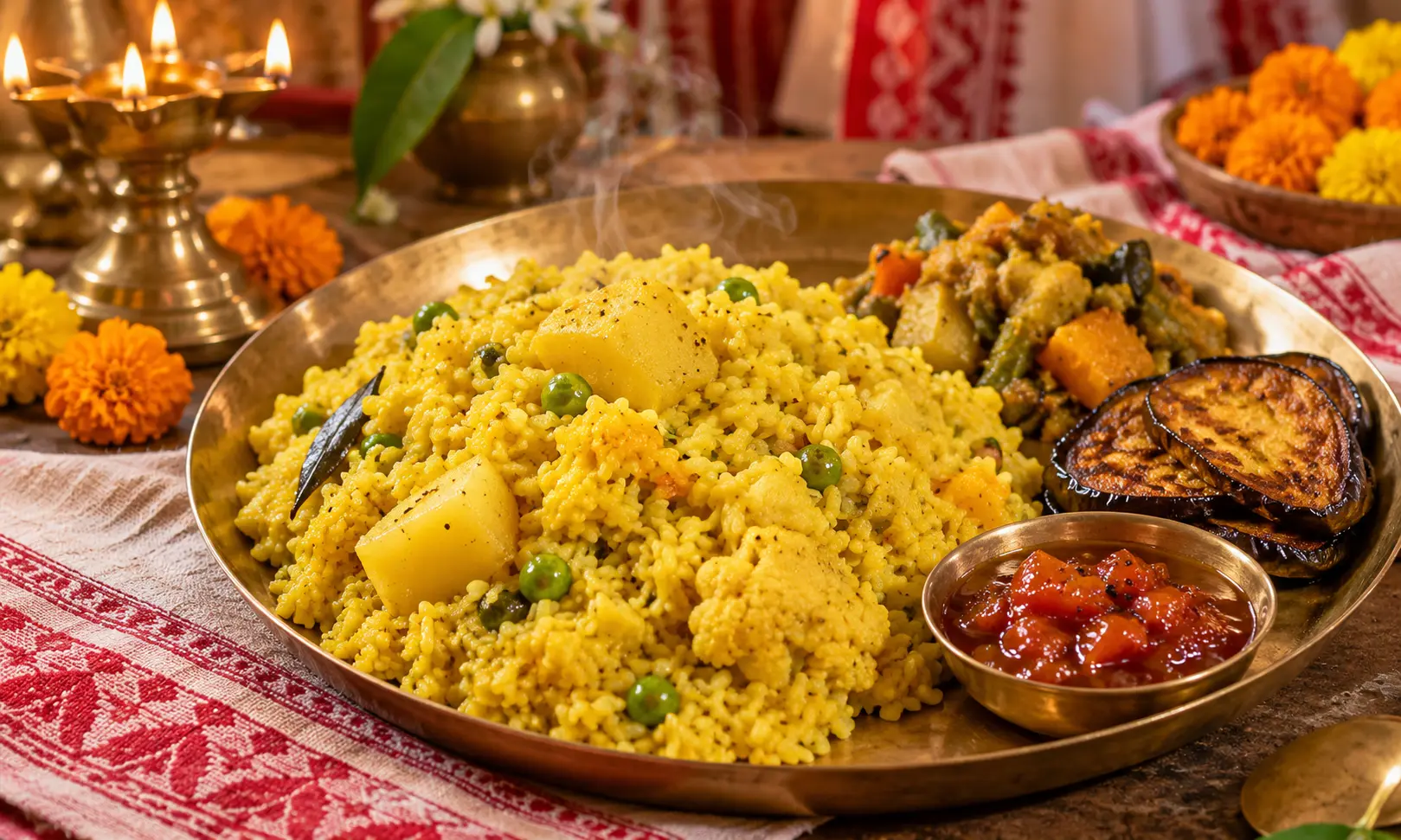
Bhoger khichuri combines rice and roasted moong dal in a preparation usually made without onion or garlic. Aromatic rice such as gobindobhog, ginger and whole spices give it fragrance, while roasting the dal adds a distinctly nutty flavour. The consistency varies: some versions are soft and loose, others more substantial.
Eat it with labra and a freshly fried beguni for contrast. If you plan to have bhog at a community puja, ask the organisers about serving arrangements rather than assuming it is available throughout the day. Khichuri is a meal in itself, so leave the elaborate restaurant order for another sitting.
2. Labra
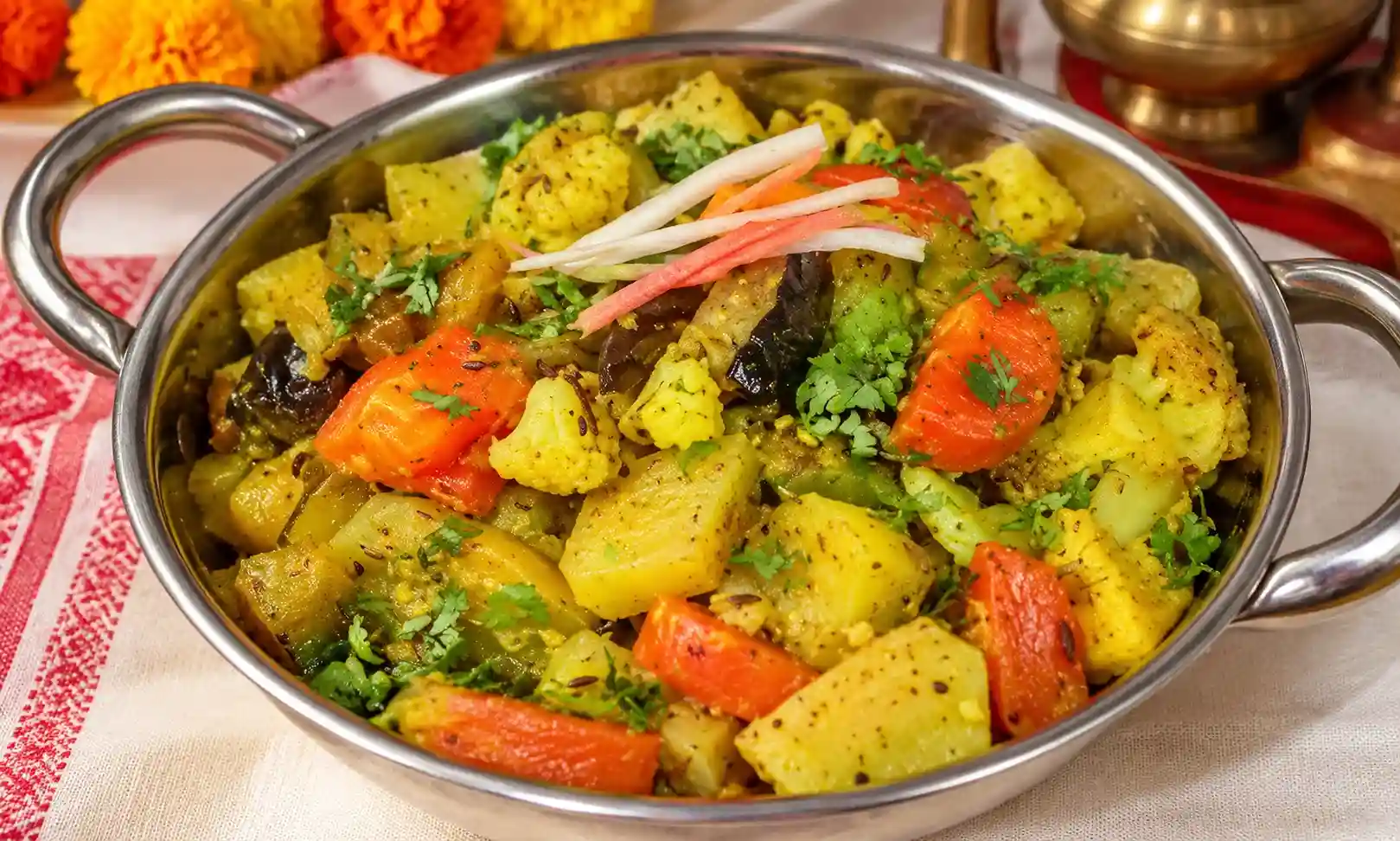
Labra is a mixed vegetable preparation in which the vegetables cook down together until their flavours combine. Pumpkin, brinjal, potato and other vegetables appear in different versions; there is no single vegetable list followed by every household. Pumpkin can contribute sweetness, while softer vegetables help bring the mixture together.
The result is softer and more integrated than a dry mixed vegetable stir-fry. With khichuri, labra adds a different texture without introducing a heavy gravy. It is a useful first dish to try if your understanding of Bengali food has so far centred on fish and meat.
3. Beguni
Beguni is a thin slice of brinjal dipped in a gram-flour batter and deep-fried. The appeal is immediate: a crisp coating gives way to soft brinjal inside. Rice flour may be added to the batter to help produce that crispness.
It works as a snack or as an accompaniment to khichuri and dal-rice. Eat it soon after it arrives, before steam softens the coating. On a menu, distinguish beguni from begun bhaja: the latter is fried brinjal without the same batter coating. Both have a place in Bengali meals, but their textures are different.
4. Luchi
Luchi is a small, puffed, deep-fried bread made with refined wheat flour. It is usually pale, with a thin outer surface and a soft interior that can be torn into pieces for scooping up dal or curry.
For a vegetarian pairing, start with cholar dal. For a richer meal, try it with kosha mangsho. Luchi is especially enjoyable freshly fried, so order manageable quantities rather than letting a large pile cool while everyone finishes their starters. If your meal also includes rice and several main dishes, a small serving is enough to experience the combination.
5. Cholar dal
Made with split Bengal gram, cholar dal is thicker and more textured than a thin everyday dal. Bengali versions often have a gentle sweetness, whole-spice seasoning and pieces of fried coconut. The coconut gives you something firm to bite into among the softened lentils.
Luchi and cholar dal make a complete pairing for someone who wants a relatively short order. The dal can also accompany a larger vegetarian spread. Expect variation in sweetness: some cooks keep it restrained, while others make that sweet-savoury quality more pronounced. It is worth choosing if you enjoy coconut and prefer warmth from spices over sharp mustard.
6. Shukto
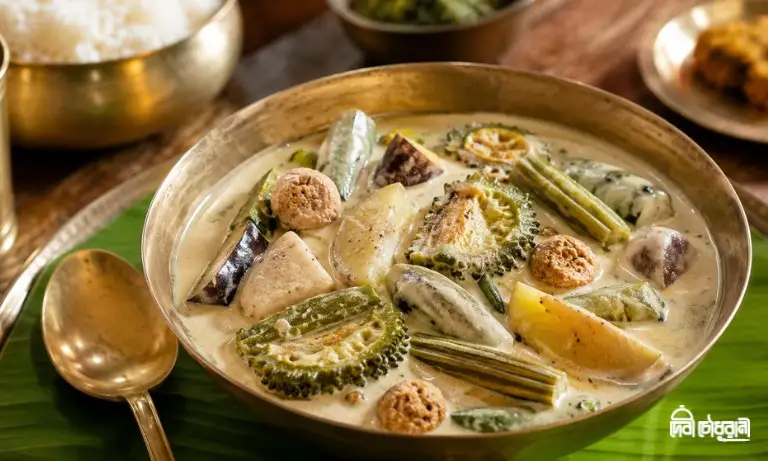
Shukto is a vegetable preparation with a characteristic bitter note, often supplied by bitter gourd. Other vegetables may include potato, raw banana and drumstick, with bori, or dried lentil dumplings, adding texture. Some versions use milk to soften the overall flavour.
In a traditional Bengali meal, shukto commonly appears near the beginning with plain rice. Try a little before moving to stronger gravies; its quiet bitterness is easier to appreciate then. It differs considerably from the sweet, spicy or mustard-heavy dishes elsewhere on the table. For a first taste, a small portion is more useful than a large helping.
7. Aloo posto
Aloo posto is potato cooked with poppy-seed paste. Its flavour depends on relatively few ingredients, with green chilli and mustard oil often accompanying the mild, nutty posto. Depending on the preparation, the paste can cling closely to the potatoes or remain slightly looser.
Plain rice is a sensible partner because it leaves the poppy-seed flavour clear. Add dal if you want a fuller meal. Aloo posto also gives a shared table a change from rich gravies. Recipes vary, including whether onion is used, so anyone seeking an onion-free preparation should ask rather than assume.
8. Dhokar dalna
Dhokar dalna consists of lentil cakes served in a spiced gravy. The lentils, commonly Bengal gram, are soaked and ground; the mixture is cooked, shaped and fried before the pieces go into the sauce. Ginger and cumin are familiar flavours in the gravy.
The cakes absorb some sauce but retain a texture quite different from potato or paneer. This makes dhokar dalna a substantial vegetarian main course with plain rice or pulao. Traditional niramish versions omit onion and garlic. If you are choosing one vegetarian centrepiece for a Puja lunch, this is a good option to look for.
9. Basanti pulao
Basanti pulao is a yellow, sweetened Bengali rice preparation, often made with gobindobhog rice, ghee and whole spices. Cashews and raisins commonly add texture and sweetness. The grains should remain distinct enough for the rice to feel different from khichuri.
Pair it with kosha mangsho if you enjoy sweetness beside a deeply savoury curry, or choose dhokar dalna for a vegetarian combination. Because the rice already has considerable flavour, it changes the character of the entire plate. For a mustard fish dish, plain rice may be the more suitable choice. A group can order both and serve each with the appropriate main.
Fish, prawns and mutton
10. Ilish bhapa
Ilish bhapa is hilsa steamed with a mustard-based paste. Depending on the recipe, yoghurt or coconut may also be included. The fish has rich, oily flesh, while mustard and green chilli give the preparation its sharpness.
Choose steamed rice to carry the sauce without adding sweetness or another layer of spice. Hilsa has fine bones, so it suits a meal you can eat slowly. If someone at the table is unfamiliar with bone-in fish, explain that before ordering. This is a different experience from a mild fish fillet, even when both dishes use mustard.
11. Bhetki paturi
Bhetki paturi commonly arrives as a banana-leaf parcel containing fish coated with mustard paste and cooked gently. Coconut, yoghurt or poppy-seed paste may soften the mustard in different versions. Opening the parcel releases the aroma before you begin eating.
Bhetki has a milder flavour than hilsa, although the mustard preparation can still be assertive. Restaurant versions often use boneless fillets, but confirm that if it matters to your group. Eat the fish and its coating with plain rice; the leaf is the wrapper. For a first Bengali fish meal, paturi offers an accessible texture with a distinctive preparation.
12. Chingri malai curry
Chingri malai curry features prawns in a coconut-milk gravy. The coconut gives the sauce richness and a gentle sweetness, with spices adding warmth. It offers a different flavour from the sharper mustard preparations of ilish or bhetki.
Plain rice lets you appreciate the prawn and coconut without another sweet element. Pulao can also work if that is the combination you prefer. When ordering for a group, ask how many prawns come in a portion: a dish with a generous amount of gravy does not necessarily contain enough pieces for everyone. Confirm whether the prawns arrive shell-on if ease of eating matters.
13. Kosha mangsho
Kosha mangsho is a mutton preparation with a thick, concentrated coating of masala. The cooking involves sustained browning and working the meat with the spices, producing a deeper flavour than a light, broth-like mutton curry. The finished gravy usually clings to the pieces.
Luchi works well for scooping up the masala, while basanti pulao brings a sweet contrast. For a shared meal, choose your rice or bread around this dish before adding other rich mains. If you are also ordering fish, eat the more delicate preparation first so the stronger mutton gravy does not dominate both courses.
Chutney and dessert
14. Tomato-khejur chutney
Tomato-khejur chutney combines tomatoes and dates in a sweet, tangy preparation. Some versions include raisins or amsotto, a dried mango preparation that adds another fruit flavour and a chewy texture.
In a Bengali meal, this chutney commonly appears towards the end of the savoury courses, often with papad. It is closer to a small sweet course than a dipping sauce for starters. Try a spoonful on its own, then a little with crisp papad. You do not need a large serving, particularly if you plan to finish with mishti doi or another dessert.
15. Mishti doi
Mishti doi is sweetened, set yoghurt. Traditional preparations use thickened milk, a yoghurt culture and sugar or jaggery. Caramelised sugar can give it a brownish colour and a deeper sweetness, although colour and firmness vary between makers.
The flavour combines sweetness with the gentle tang of yoghurt. After a meal with mustard fish or kosha mangsho, a small chilled portion provides a clear change in temperature and texture. Mishti doi contains dairy, and its sweetness is part of the dish; it should not be confused with plain yoghurt simply because both are called doi.
How to turn the list into a Puja meal
Choose the main dish you most want to try, then decide what will accompany it. Ordering several strongly flavoured gravies at once makes it harder to appreciate their differences.
These combinations offer useful starting points:
| The meal you want | A combination to consider |
| A bhog-style vegetarian meal | Khichuri, labra, beguni and tomato-khejur chutney |
| A vegetarian restaurant lunch | Plain rice, shukto, aloo posto and dhokar dalna |
| A mustard fish meal | Plain rice, ilish bhapa or bhetki paturi, followed by mishti doi |
| A meal centred on mutton | Luchi or basanti pulao with kosha mangsho |
| A prawn lunch | Plain rice with chingri malai curry and a vegetable side |
For a mixed group, keep the vegetarian dishes separate and order enough for the people relying on them. Ask about portion sizes before multiplying every dish by the number of diners.
A thali can help you sample several preparations in smaller portions. Check its contents, fish or meat choices and refill rules before ordering. À la carte gives you greater control over the combinations, especially when some guests want mustard fish and others would prefer prawns or a vegetarian meal.
Planning a Bengali Puja meal in Salt Lake
If your pandal plans bring you through Salt Lake, decide where lunch fits before adding more stops to the route. Give the meal its own time, particularly if your group includes anyone who would prefer to eat slowly.
Devi Chowdhurani is at 46, Street Number 10, DN Block, Sector V. Use the current Puja menu to check which preparations are available for your visit; this guide describes Bengali dishes across the cuisine rather than promising every item on one menu. Devi Chowdhurani
Planning your Puja lunch? Explore Devi Chowdhurani’s Durga Puja special menu and call 70030 30425 to confirm the dishes for your date and book your table.