Ilish, Bhetki & Pabda: 3 Bengali Fish to Try During Durga Puja
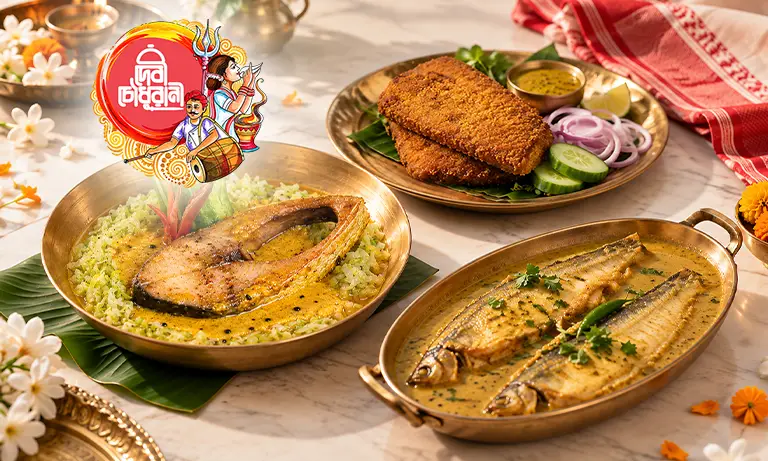
Table of Contents
The rhythm of Kolkata changes during Durga Puja, with mornings beginning earlier, afternoons becoming longer, and people’s plans generally centre on the pandals, their friends, their family and food.
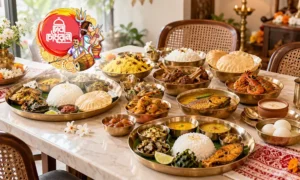
In many Bengali households the Puja meal seems to be missing something if it does not include fish; some people look forward to Ilish, others prefer the milder flavour of Bhetki, while Pabda stays a favourite choice among those who like lighter Bengali curries.
At Devi Chowdhurani, these familiar Bengali flavours fit naturally into the Puja season. If you are planning a festive lunch or dinner in Salt Lake this year, these three fish are worth keeping on your list.
Why fish remains central to a Bengali festive meal
Fish has long been central to Bengali home cooking. It appears in everyday lunches as well as larger family meals, though the preparation often becomes richer or more elaborate during celebrations.
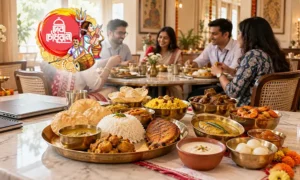
Durga Puja is also one of those occasions when families tend to spend more time eating together. After hours of pandal hopping, walking through crowded streets and meeting relatives, sitting down over rice, dal and a well-cooked fish preparation can feel far more satisfying than another quick snack between stops.
The choice of fish matters too. Ilish, Bhetki and Pabda each bring a very different character to the table.
Ilish: bold, rich and instantly recognisable
Ilish needs little introduction in a Bengali household.
Its flavour is stronger than many other commonly eaten fish, and that is exactly why people who love it tend to have strong preferences about how it should be cooked.
Mustard-based preparations are among the most familiar ways to serve Ilish. The sharpness of mustard works well with the natural richness of the fish, especially when eaten with hot steamed rice.
During Puja, Ilish can easily become the centre of the meal. It does not need elaborate presentation. A good piece of fish, a balanced mustard gravy and rice are often enough.
For diners who want a distinctly Bengali dish during the festive season, Ilish is one of the obvious places to start.
Bhetki: lighter flavour, wider range of preparations
Bhetki is quite different from Ilish.
The flesh is softer and the flavour is milder, which makes it suitable for several styles of cooking. It can work with subtle Bengali gravies as well as richer preparations where spices, cream or mustard play a larger role.
That versatility also makes Bhetki popular at family meals. Someone who finds Ilish too strong may find Bhetki easier to enjoy.
Its texture is another reason it works well in restaurant cooking. When prepared carefully, the fish remains soft without being overwhelmed by the gravy around it.
If your Puja table includes people with different tastes, Bhetki is often an easy choice.
Pabda: simple food done properly
Pabda has a quieter appeal.
It is a soft fish and usually works best with a light gravy rather than a heavy masala. The flavour of the fish remains clear, while ingredients such as green chilli, mustard or simple spices add enough depth without taking over the dish.
This is the kind of preparation that many people associate with home-style Bengali food.
Rice and Pabda jhol may not look as elaborate as some festive dishes, but that simplicity is part of its appeal. After a day of rich snacks, sweets and restaurant hopping, a lighter fish curry can be exactly what the table needs.
For people who prefer familiar Bengali flavours over very rich gravies, Pabda deserves attention.
Choosing between Ilish, Bhetki and Pabda
There is no single best choice because the three fish offer very different eating experiences.
Ilish has a stronger flavour and natural richness. Bhetki is milder and works across a wider range of preparations. Pabda is softer, lighter and especially suited to simple Bengali gravies.
The better choice depends on what you feel like eating that day.
A long afternoon of pandal hopping may call for rice with a comforting Pabda curry. A family lunch can be a good occasion for Bhetki. If the plan is a full Bengali festive meal and everyone at the table enjoys strong traditional flavours, Ilish can easily take centre stage.
Bengali food after pandal hopping in Salt Lake
Durga Puja meals are often decided around the day’s route rather than planned far in advance.
One group may finish visiting pandals around Salt Lake and look for a late lunch. Another family may want dinner after an evening of Puja visits. In both cases, a Bengali restaurant nearby can make the day easier, especially when people want to sit together rather than eat standing near a crowded stall.
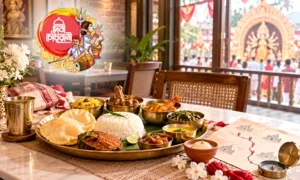
Devi Chowdhurani in DN Block, Sector V, serves Bengali dishes in a setting suited to family lunches, dinners and group meals.
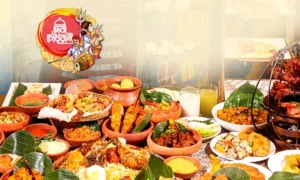
Along with fish preparations, diners can build a fuller Bengali meal around rice, dal, vegetables, meat dishes, thalis and desserts, depending on what they want that day.
Make fish part of your Puja meal this year
Durga Puja food does not have to be complicated.
Sometimes the most satisfying meal is simply the one you were already looking forward to: hot rice, a well-cooked fish preparation and enough time to sit with family or friends.
If fish is already part of your Puja tradition, Ilish, Bhetki and Pabda each give you a different reason to return to Bengali cooking.
For a festive Bengali meal in Salt Lake, visit Devi Chowdhurani at 46, Street Number 10, DN Block, Sector V, Bidhannagar, Kolkata, West Bengal 700091.
For table reservations, call 70030 30425.
Make This Pujo Special with Bengali Flavours
Planning a Puja lunch or dinner in Kolkata? From traditional Bengali thalis to signature dishes, Devi Chowdhurani in Salt Lake Sector V has a festive menu for your Pujo celebrations.