What Is Shukto? Bengal’s Bitter-Sweet Beginning to a Traditional Meal
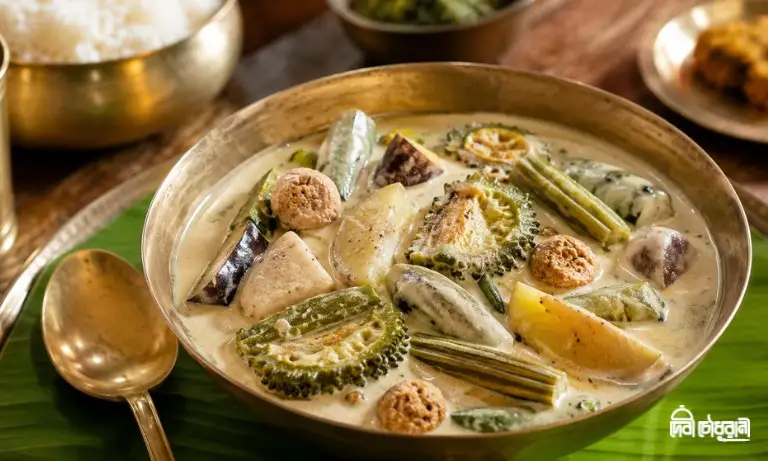
Table of Contents
Some dishes satisfy hunger, while others evoke memories of home—and Shukto belongs firmly to the latter. In a traditional Bengali meal, this humble medley of vegetables in a mildly bitter gravy often makes the first appearance, served simply with steaming hot rice. It may not boast rich spices or vibrant colours, but for generations of Bengalis, Shukto has remained one of the most comforting and cherished parts of the meal.
More than just a dish, Shukto is a reminder of leisurely Sunday lunches, family gatherings, and recipes lovingly passed down through generations. Its gentle bitterness awakens the palate and brings balance to the courses that follow, reflecting the quiet elegance at the heart of Bengali cuisine. For Bengalis, Shukto is not merely the first course—it is the beginning of a cherished ritual.
What Is Shukto?
Shukto is a traditional Bengali mixed vegetable dish known for its mild bitter-sweet taste. It is usually made with vegetables like bitter gourd, raw banana, potato, brinjal, drumstick, papaya, and sometimes bori, which are small sun-dried lentil dumplings.
The flavour of Shukto is delicate. It is slightly bitter, lightly sweet, mildly creamy, and aromatic. The bitterness usually comes from bitter gourd, while vegetables like potato, brinjal, raw banana, and drumstick add body, softness, and depth.
Traditional Shukto often uses ingredients like ginger, radhuni, ghee, milk, mustard, or poppy seed paste depending on the family recipe. Every Bengali household may have its own way of making it, but the heart of the dish remains the same: balance.
A good Shukto is not too bitter. It is not too sweet. It is not too spicy. It is not too rich.
It is carefully held in the middle.
And that balance is what makes it so special.
Why Shukto Feels So Bengali
Shukto reflects the quiet elegance of Bengali cuisine. Traditionally served at the beginning of a meal, its gentle bitterness awakens the palate and sets the stage for the richer flavours that follow. Mild yet full of character, Shukto embodies the balance and restraint that Bengalis have always celebrated in their food.
For many, the first spoonful of Shukto with hot rice brings back memories of Sunday lunches, festive bhoj, and meals lovingly prepared at home. Some dishes simply satisfy hunger—Shukto nourishes nostalgia.
What Does Shukto Taste Like?
Shukto offers a gentle balance of bitterness and sweetness, with a soft, comforting texture that makes it uniquely satisfying. The slight bitterness of karela is mellowed by vegetables, milk, and a touch of ghee, while ingredients like brinjal, raw banana, and bori add depth and character.
Unlike spicy curries, Shukto relies on subtle flavours rather than bold heat. Mild yet deeply comforting, it proves that simple food can be wonderfully memorable.
Common Ingredients Used in Shukto
Every family has its own version of Shukto, and that is part of its charm. Some people make it more creamy. Some prefer it lighter. Some add poppy seed paste. Some use mustard. Some add more bori. Some keep the vegetables chunky, while others like a softer texture.
Still, many traditional Shukto recipes commonly include:
Bitter gourd: The ingredient that gives Shukto its signature bitter note.
Raw banana: Adds body, firmness, and a traditional texture.
Potato: Brings softness and comfort to the dish.
Brinjal: Turns silky and absorbs the flavour beautifully.
Drumstick: Adds an earthy aroma that feels very familiar in Bengali cooking.
Raw papaya: Adds body and mild sweetness.
Bori: Sun-dried lentil dumplings that give texture and bite.
Radhuni: A classic Bengali spice that gives Shukto its old-world aroma.
Ginger: Adds warmth without making the dish spicy.
Milk or a light creamy base: Softens the bitterness and gives the gravy a gentle finish.
Ghee: Usually added near the end for aroma and depth.
But ingredients alone do not make Shukto special.
The real skill is in balance. Too much bitterness can make the dish harsh. Too much sweetness can take away its character. Too much spice can disturb its gentle nature. Too much richness can make it heavy.
Shukto needs a careful hand.
That is why it often feels like a dish made by someone who truly understands food.
Why Is Shukto Served First?
In many Bengali homes, Shukto is served at the beginning of the meal.
This is not just habit. It has cultural meaning.
Bitter dishes are traditionally believed to prepare the appetite and awaken the palate. Shukto creates a clean, gentle beginning before the richer and stronger dishes arrive.
But there is also something beautiful about beginning a meal with a bitter-sweet dish.
Bengali food understands contrast. A proper meal does not move in one straight line. It travels through different moods: bitter, salty, soft, fried, spicy, sour, sweet, and comforting.
Shukto starts that journey with maturity.
It teaches the tongue that taste is not only about excitement. Sometimes, taste is about patience. Sometimes, the quietest dish on the plate carries the deepest meaning.
That is why Shukto is served first.
It gives the Bengali meal its first note.
Dudh Shukto: The Softer and Creamier Version
One loved variation of Shukto is Dudh Shukto.
“Dudh” means milk. In this version, milk is used to make the dish softer, smoother, and more comforting. The milk gently reduces the sharpness of the bitter gourd and gives the dish a pale, delicate, creamy finish.
Dudh Shukto is especially loved by people who prefer a mild beginning to the meal. It has an old Bengali charm. It feels calm, homely, and graceful.
At Devi Chowdhurani, Thakur Barir Dudh Shukto carries this traditional emotion. Prepared with vegetables like bitter gourd, brinjal, drumstick, raw banana, and potato, along with the aroma of ginger and radhuni, it brings the warmth of an old Bengali kitchen to the table.
It is not a dish that tries to be loud.
It is a dish that makes you pause.
And sometimes, that is exactly what a good Bengali meal should do.
Shukto and the Beauty of Bengali Vegetarian Food
Many people outside Bengal think Bengali food is mostly about fish, mutton, and sweets.
Of course, fish is important. Mutton is loved. Sweets are celebrated. But Bengali vegetarian cooking has a deep intelligence of its own, and Shukto is one of the finest examples of that.
It proves that vegetables can be elegant without being covered in heavy masala. It shows that vegetarian food can be festive without being oily. It reminds us that a dish does not have to be spicy to be memorable.
In Shukto, every ingredient has a role.
The bitter gourd gives character. The potato gives comfort. The raw banana gives strength. The brinjal gives softness. The drumstick gives aroma. The bori gives texture. The radhuni gives memory.
Together, they create something greater than a simple vegetable curry.
That is the beauty of Bengali vegetarian food.
It can take humble ingredients and turn them into something deeply meaningful.
Shukto Is Not Just Mixed Vegetable Curry
It is easy to look at Shukto and call it a mixed vegetable curry, but that would not be correct.
A regular mixed vegetable curry can be spicy, tomato-based, onion-heavy, colourful, or masala-rich. Shukto is different.
It has a bitter element. It has a mild flavour profile. It has a traditional place at the beginning of the meal. It has a cultural role.
Shukto is not made by simply putting vegetables together.
It is planned.
The bitter gourd has a purpose. The raw banana has a purpose. The drumstick has a purpose. The milk has a purpose. The ghee has a purpose. Even the timing of when it is served has a purpose.
That is why Shukto deserves respect.
It may look simple, but it carries generations of food wisdom.
Shukto: The Bengali Way of Eating Balance, Memory and Tradition
Shukto is best enjoyed with hot steamed rice at the very beginning of a Bengali meal. Its gentle bitterness and comforting flavours prepare the palate for richer dishes that follow.
It reflects the Bengali idea that a meal should have rhythm, balance and order. The first course does not need to be loud; it simply needs to calm the senses.
Even today, Shukto holds a quiet place on Bengali tables. It reminds us that great food is also about patience, restraint and tradition.
For many Bengalis, Shukto carries memories of Sunday lunches, festive feasts and family recipes. More than a vegetable dish, it is nostalgia served in a bowl.
Final Thoughts
Shukto is one of Bengal’s most graceful traditional dishes.
It is bitter, but gentle. Simple, but full of character. Mild, but deeply memorable. It does not try to impress you immediately. It waits for you to understand it.
And maybe that is why Bengalis feel so strongly about it.
Because Shukto is not only about taste. It is about growing up with Bengali food. It is about the first course of a proper meal. It is about family lunches, slow cooking, and the quiet wisdom of old Bengali kitchens.
So the next time you sit down for a traditional Bengali meal, do not skip the Shukto. Take a little rice, mix it slowly, and taste it with patience.
You may find that this humble bitter-sweet dish says more about Bengal than many grand dishes ever can.
Taste Traditional Shukto at Devi Chowdhurani
At Devi Chowdhurani, our Thakur Barir Dudh Shukto is prepared with the old Bengali emotion of balance, softness, and comfort. Made with vegetables like bitter gourd, brinjal, drumstick, raw banana, and potato, along with the aroma of ginger and radhuni, it brings the warmth of a traditional Bengali kitchen to the table.
Explore our carefully curated Bengali menu and begin your meal the traditional way — with hot rice, Shukto, and the comforting taste of home. Call Devi Chowdhurani (070030 30425) today to reserve your table.