Kosha Mangsho vs Mutton Dak Bungalow: Two Bengali Mutton Classics Explained
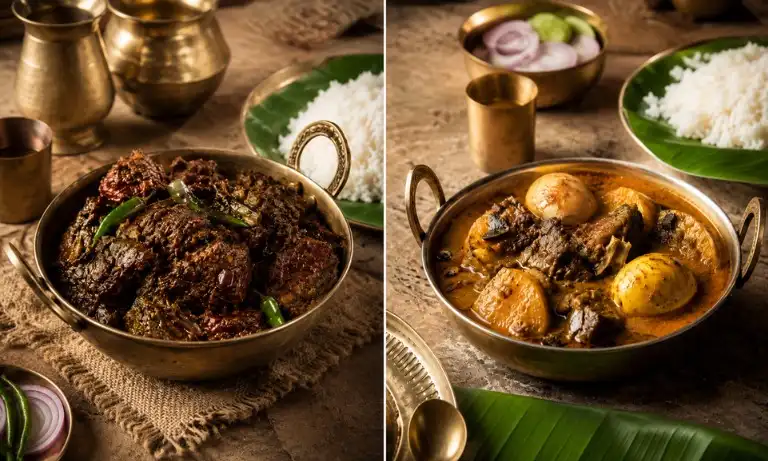
Table of Contents
The aroma of slow-cooked mutton has a special way of bringing Bengalis to the dining table, and Kosha Mangsho vs Mutton Dak Bungalow is a comparison that beautifully shows two different sides of Bengali mutton love. While the rich and iconic Kosha Mangsho has long been a favourite, Mutton Dak Bungalow carries its own rustic charm, offering a comforting curry steeped in history and nostalgia.
Both dishes are deeply rooted in Bengali culinary tradition, yet they differ in flavour, texture, and character. So, if you’ve ever wondered whether to choose the bold indulgence of Kosha Mangsho or the homely warmth of Mutton Dak Bungalow, this comparison will help you discover what makes each one so special.
What Is Kosha Mangsho?
Kosha Mangsho is a classic Bengali mutton dish known for its rich, dark, slow-cooked gravy.
The word “kosha” refers to a style of cooking where the meat and spices are cooked slowly until the moisture reduces, the oil separates, and the gravy becomes thick, deep, and intense. It is similar in feeling to bhuna-style cooking, where patience is everything.
A good Kosha Mangsho is not watery. It is not light. It is not rushed.
The gravy should cling to the mutton. The colour should be deep and inviting. The meat should become tender but still hold its shape. The taste should feel rich, spicy, slightly sweet, and full of depth.
For many Bengalis, Kosha Mangsho is connected with Sundays, family lunches, celebrations, and festive meals. It is often served with luchi, paratha, pulao, or hot rice. Each pairing changes the mood of the dish.
With luchi, it feels festive.
With pulao, it feels grand.
With plain rice, it feels like home.
What Is Mutton Dak Bungalow?
Few dishes stir Bengali emotions quite like Kosha Mangsho. Rich, dark, and slow-cooked to perfection, it is the undisputed star of Sunday lunches, festive gatherings, and celebrations. Its thick, spice-laden gravy and tender mutton create a depth of flavour that only patience and careful cooking can achieve.
What makes Kosha Mangsho truly special is its versatility. Pair it with fluffy luchi for a festive treat, basanti pulao for a grand feast, or simple steamed rice for the ultimate comfort meal. No matter how it is served, this timeless classic brings the same feeling to the table—pure Bengali comfort.
The Main Difference Between Kosha Mangsho and Mutton Dak Bungalow
The biggest difference between Kosha Mangsho and Mutton Dak Bungalow lies in their character. Kosha Mangsho is rich, slow-cooked, and intensely flavourful, with a thick gravy that makes it perfect for festive Bengali meals. Mutton Dak Bungalow, by contrast, offers a lighter, rustic curry often accompanied by potatoes and eggs, bringing a sense of warmth and old-world comfort.
If Kosha Mangsho is the star of a leisurely Sunday lunch, Mutton Dak Bungalow is the kind of hearty meal that feels comforting and nostalgic. Different in style, yet equally beloved, both dishes showcase the timeless charm of Bengali cuisine.
Kosha Mangsho: Dark, Rich, and Slow-Cooked
Kosha Mangsho is a dish of patience.
You cannot hurry it and expect the same result. The onions need time. The spices need time. The meat needs time. The gravy needs time to reduce and deepen.
That is why the best Kosha Mangsho often feels layered.
The first thing you notice is the colour. A deep reddish-brown or dark brown gravy that immediately tells you this dish has been cooked slowly. Then comes the aroma of spices, mustard oil, onion, ginger, garlic, and garam masala. Then the meat itself — tender, rich, and full of flavour.
Kosha Mangsho is not only about adding spices. It is about cooking them properly.
The gravy must lose its rawness. The oil must separate. The mutton must absorb flavour. The sauce must become thick enough to hold the meat lovingly.
That is why Bengali families take Kosha Mangsho seriously.
It is not a casual curry.
It is a dish with expectation.
Mutton Dak Bungalow: Rustic, Aromatic, and Full of Old-World Charm
Mutton Dak Bungalow has a different kind of personality.
It is hearty, warm, and comforting. It does not chase the deep darkness of Kosha Mangsho. Instead, it gives you a more curry-like experience with old-style aroma and generous flavour.
Many versions include potatoes and boiled eggs, which make the dish feel complete and satisfying. The egg is important for many people because it gives the dish a distinct identity. When you see mutton, potato, gravy, and egg together, the dish immediately feels different from regular mutton curry.
Mutton Dak Bungalow has a travel story attached to it.
Whether one thinks of colonial rest houses, old Bengal kitchens, or Anglo-Indian cooking, the dish carries a mood of movement. It feels like something cooked for someone who needed a proper meal, not a fancy one.
That is its charm.
It does not need to be overly polished. It needs to be warm, generous, and memorable.
Taste Difference: Which One Is Stronger?
Kosha Mangsho usually tastes stronger, deeper, and richer.
Because the gravy is reduced and slow-cooked, the flavour becomes concentrated. The spices feel more intense. The meat absorbs the masala deeply. Every bite feels heavy with flavour.
Mutton Dak Bungalow is usually more open and curry-like. It can still be spicy and aromatic, but the experience is different. The gravy is not usually as reduced as Kosha Mangsho. The flavour feels hearty rather than intensely dark.
If you enjoy thick, bold, spicy, slow-cooked mutton, Kosha Mangsho may feel more satisfying.
If you enjoy a rustic mutton curry with potatoes, eggs, and old-world comfort, Mutton Dak Bungalow may feel more interesting.
One is intense.
The other is nostalgic.
Gravy Difference: Thick vs Curry-Like
The gravy tells the story very clearly.
In Kosha Mangsho, the gravy should be thick and clingy. It should not run across the plate like a thin curry. It should coat the mutton pieces. The spices should feel roasted and reduced. The colour should be deep.
This is what gives Kosha Mangsho its famous personality.
Mutton Dak Bungalow usually has more curry character. The gravy may be rich, but it is often looser than Kosha Mangsho. It is meant to be eaten with rice, bread, paratha, or whatever feels comforting. The potato and egg also absorb the gravy beautifully.
So if you are choosing by gravy style, the answer is simple.
Choose Kosha Mangsho for thick, dark, intense gravy.
Choose Mutton Dak Bungalow for a more rustic, curry-like mutton experience.
Ingredient Difference
Both dishes can use mutton, onion, ginger, garlic, spices, and mustard oil, but the personality of the ingredients differs.
Kosha Mangsho is usually built around slow cooking, spice reduction, and deep browning. The focus is on the mutton and the thick masala. Potato may be added in many Bengali homes, but the dish is still mainly about the meat and gravy.
Mutton Dak Bungalow often feels more generous in structure. Potatoes and boiled eggs are commonly associated with it. The gravy may carry a different balance of whole spices and curry-style warmth.
Kosha Mangsho feels focused and intense.
Mutton Dak Bungalow feels fuller and more rustic.
Both dishes use familiar ingredients, but the final experience is very different.
Which One Is More Bengali?
This is where the answer becomes interesting.
Kosha Mangsho is more directly associated with Bengali home cooking, festive meals, Sunday lunches, and traditional Bengali mutton cravings. It feels strongly rooted in Bengali food memory.
Mutton Dak Bungalow has a more mixed identity. It is commonly connected with Anglo-Indian and colonial-era food traditions, while also being loved in Bengal and cooked in Bengali-style kitchens. It carries both history and adaptation.
So, if someone asks which dish feels more classically Bengali, many people will say Kosha Mangsho.
But if someone asks which dish carries a fascinating old Bengal travel-and-curry story, Mutton Dak Bungalow has its own charm.
One belongs strongly to Bengali family food emotion.
The other belongs to a layered culinary history.
Which One Is Better with Rice?
Both can be excellent with rice, but in different ways.
Kosha Mangsho with rice is rich and satisfying. The thick gravy mixes with the rice and creates a powerful, spicy, slow-cooked bite. It feels heavy, festive, and deeply comforting.
Mutton Dak Bungalow may feel even more naturally suited to rice because of its curry-like gravy. The rice absorbs the sauce beautifully, and the potatoes and eggs make the plate feel complete.
If you want a thick, intense mutton-rice combination, choose Kosha Mangsho.
If you want a hearty curry-rice meal with old-style comfort, choose Mutton Dak Bungalow.
Both work.
Your mood decides.
Which One Is Better with Luchi or Paratha?
Kosha Mangsho is almost unbeatable with luchi.
The thick gravy is perfect for tearing a soft luchi and scooping up the masala. The richness of the mutton and the softness of the luchi create a combination that many Bengalis consider pure happiness.
Paratha also works beautifully with Kosha Mangsho because it can hold the thick gravy well.
Mutton Dak Bungalow can also be eaten with paratha or bread, but it does not have the same iconic relationship with luchi that Kosha Mangsho has.
So if luchi is on the table, Kosha Mangsho feels like the natural choice.
There is something about luchi and Kosha Mangsho that feels almost emotional.
Which One Feels More Festive?
Kosha Mangsho usually feels more festive.
It is the dish many Bengalis associate with special Sundays, birthdays, puja meals, Poila Boishakh, family gatherings, and celebrations. The richness of the dish makes the meal feel important.
Mutton Dak Bungalow feels special too, but in a different way. It feels historical, rustic, and slightly unusual. It may not have the same everyday emotional fame as Kosha Mangsho, but it brings curiosity and old-world charm to the table.
If you want a familiar celebration, Kosha Mangsho wins.
If you want a mutton dish with a story, Mutton Dak Bungalow wins.
Why Bengalis Love Kosha Mangsho So Much
Kosha Mangsho is loved because it feels like reward food.
It is not something you eat in a hurry. It takes time to cook and time to enjoy. The smell itself can make people impatient. In many homes, people start asking about lunch long before the dish is ready.
There is also emotion attached to it.
Kosha Mangsho often means Sunday. It means family. It means a meal where everyone sits a little longer. It means luchi on the plate, extra gravy requested, and someone quietly hoping for one more piece of mutton.
That is why Kosha Mangsho is not only a dish.
It is a Bengali mood.
Why Mutton Dak Bungalow Deserves More Attention
Mutton Dak Bungalow deserves attention because it offers a different mutton experience.
It is not trying to be Kosha Mangsho. It has its own identity.
The potato, egg, curry-like gravy, and old-world story make it memorable. It feels generous and comforting. It also gives people a chance to explore Bengali and Anglo-Indian food connections beyond the usual famous dishes.
For food lovers who enjoy history on the plate, Mutton Dak Bungalow is fascinating.
It reminds us that Bengal’s food culture was shaped not only by homes and festivals, but also by travel, colonial kitchens, rest houses, and changing times.
Some dishes become famous because they are everywhere.
Some dishes remain special because they feel discovered.
Mutton Dak Bungalow belongs to the second kind.
Final Thoughts
Kosha Mangsho and Mutton Dak Bungalow are both beloved Bengali mutton classics, yet each tells a different story. Kosha Mangsho is rich, slow-cooked, and deeply tied to memories of Sunday lunches, festive gatherings, and family celebrations. Mutton Dak Bungalow, with its rustic gravy and old-world charm, reflects a culinary legacy shaped by travel and tradition.
One brings the warmth of home, the other the romance of history—but both capture the essence of Bengali food culture. Because for Bengalis, mutton is never just about meat and gravy; it is about memories, traditions, and the joy of sharing a meal that lingers long after the last bite.
Taste Bengali Mutton Classics at Devi Chowdhurani
At Devi Chowdhurani, Bengali mutton dishes are prepared with the warmth, richness, and respect that this cuisine deserves. From slow-cooked classics to traditional favourites, every dish is made to bring back the comfort and emotion of a proper Bengali meal.
Book your table ( 070030 30425 ) and experience the timeless flavours of Bengal, where every mutton dish is served with tradition, nostalgia, and a touch of home.